Many sites, one account.
Hub is where sites stop being separate problems. Equipment reports in over MQTT, people get the screens and alerts that belong to them, and you manage the whole estate — the Edge installations included — from one place.
Capabilities
What you get.
Devices and telemetry
PLCs connect over authenticated MQTT and publish the tags you select. Live values, history, quality.
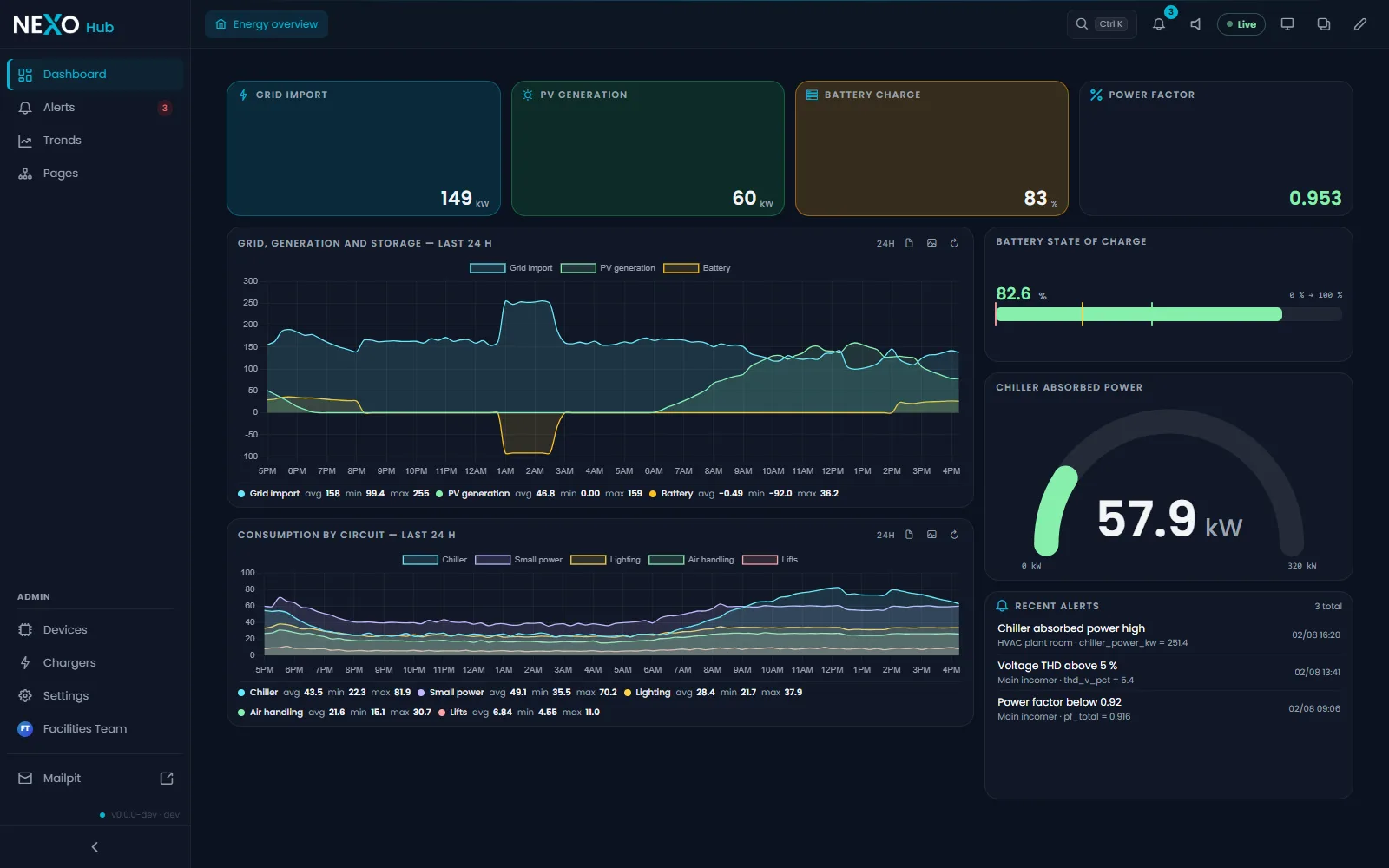
Dashboards and SCADA pages
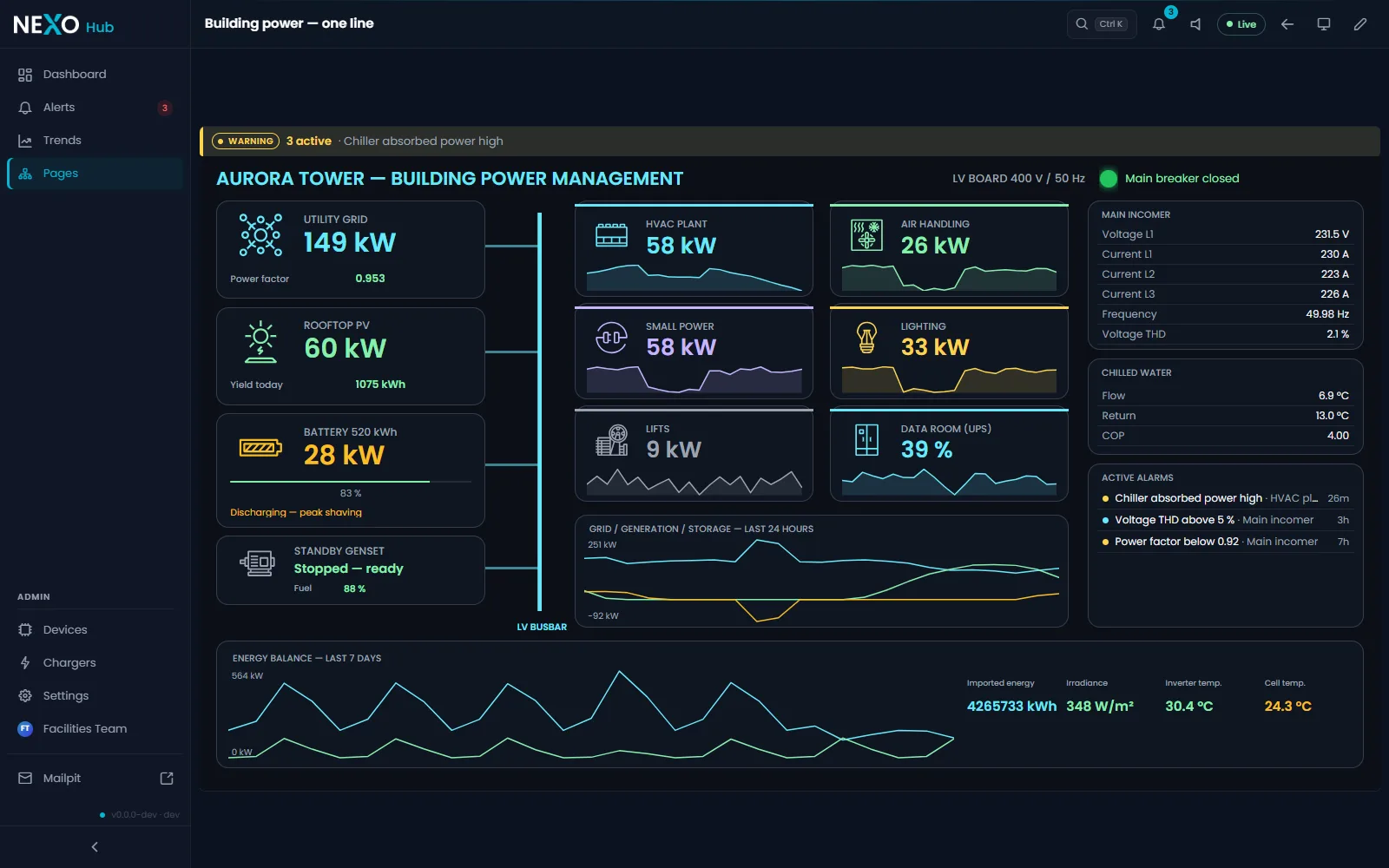
Operator views from widgets, or the plant drawn on a canvas with commands where you allow them.
Alerting that escalates
Multi-condition rules, delays, maintenance windows, retries — and escalation when nobody acknowledges.
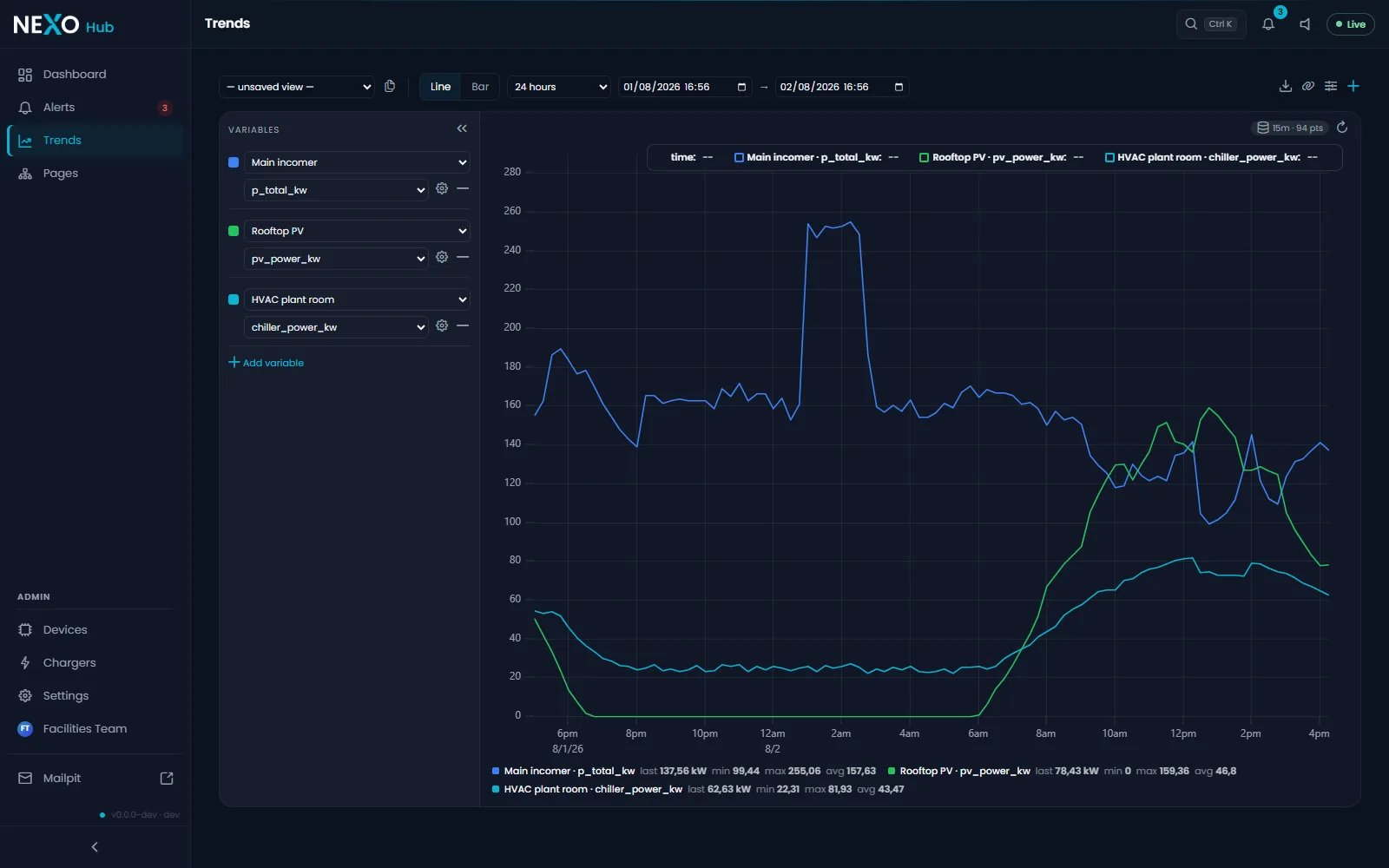
Trends
Compare tags across devices and periods, with aggregation, envelopes and links to an exact view.
Edge fleet
Every installation with its version, device count and uptime — and whether its last update applied.
EV charging
OCPP 1.6J stations: sessions, meter values, RFID lists, reservations and remote operations.
On screen
Two ways to look at a site.
A dashboard when you want the numbers, a drawn page when you want the plant. Both read the same live tags.
Multi-tenant
Built multi-tenant, not adapted into it.
Isolation is enforced in the database itself, not only in application code: every tenant-scoped table carries row-level security, so a query that forgets a filter returns nothing rather than someone else's data.
Roles that mean something
Operating equipment and changing security settings are different permissions, and every consequential action is audited.
Your brand, not ours
Per-tenant colours, logo, fonts and background — right down to the login page your people see.
Scheduled backups
Automatic archives with retention, and restore into a clean tenant when you need it.
Start from the plant floor.
Hub is most useful once something reports into it. Installing Edge on one machine is the shortest path — it registers itself and shows up in the fleet.